

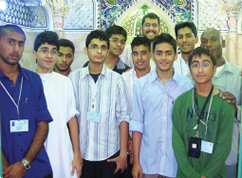
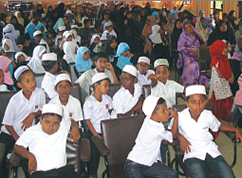

Dr Asgharali Moledina recently had the opportunity to visit Bangalore, Sangli and Pune during the month of September 2014.

Translate this page

08 October 2026 / 25. Rabi-Uth-Thani 1448
Remembering Ayatullah Sayyid Muhsin Tabatabi al Hakim
Sayyid Muhsin Tabatabi al Hakim is considered to be one of the most famous scholars in last 50 years. After Ayatullah Burujardi, he was among the renowned Maraji of Najaf.
This colleague of Ayatullh Khoie has nurtured many students among whom few are contemporary maraji namely, Ayatullah Sistani, Ayatullah Wahid Khurasani, Ayatullah Makarim Shirazi and few others.
His magnum opus ‘Mustamsak al ‘Urwat al Uthqa’ in 14 volumes is widely used in contemporary academic circles.

Ayatullah Muhsin Al Hakim (right)
Community leaders had a great relation with this late marja and he was the one who inspired the community members to commence the tabligh activities among the indigenous communities in East Africa. He has been always an insightful and inspirational personality for the entire community. Apart from religious guidance, he also motivated the donors to strive for the upliftment on Shias in Africa and Indian sub continent.
He passed away on 27th of Rabi al Awwal in 1390 AH/1970 AD and then buried in his own library in Najaf.
Let us all remember this great personality with a Sura-e-Fateha
Related News

While we are celebrating the birth anniversary of the last saviour of the humanity, the only promised one, the spring for the humankind, one and only one beloved Imam Al-Mahdi.
It has been confirmed that the Secretary General of The World Federation, Shan-E-Abbas Hassam will inshAllah be stepping down from his role.