






The World Federation is pleased to share with you the nominations submitted to us by you! Click here to find out who our community nominated for Fatima Inspires 2018.

Translate this page

14 October 2026 / 2. Jamaad-Ul-Awwal 1448
REFLECTION: The Inaugural Khōjā Studies Conference (1/3)
Earlier this month, in collaboration with The World Federation of KSIMC and Florida International University, the first ever Khoja Studies conference was hosted in Paris. Its focus was to bring together transdisciplinary international research on the history of the Khoja peoples. The conference explored religious and social transformations that occurred as a result of migration and cosmopolitanism. It bought together participants researching across communities related to the Khoja; including the Lohana, Bohra and Memon. And perhaps most importantly it saw people from across the world meet on the 6th floor of the School for Advanced Studies in the Social Science (EHESS), to discuss, learn, share, debate, absorb and reflect on the history of the Khoja people.

I was one of those there to absorb and reflect. Far from an academic by profession, curiosity and an inquisitive nature led me to the two day conference, ready to absorb and answer a list of questions. Little did I realise, I’d leave more inquisitive, with slightly more clarity coupled with a tad more confusion, and certainly a whole host more questions. As the Co-Chair of the Khoja Heritage Project of The World Federation, Dr. Hasnain Walji put to me in one of the breaks; “perhaps this is the beginning of the journey”. And I’d be inclined to agree.
The most apparent thing from the conference was how little I knew about Khoja heritage, and I’d humbly hazard a guess that many Millennials and Generation Z’s would fall in the same category. Growing up as part of the Khoja Twelver community in London, many of us will relate to a general understanding of ‘Khoja Culture’. We most likely have a more concrete understanding of our faith history – it being the consistent theme in our community centers. But often our own understanding of heritage stems from the countless stories from grandparents and parents, visits to the mother and father land, and being privy to collective conversations by aunties and uncles at numerous family gatherings.
The conference was most certainly an academic space. But as I diligently noted down key words to Google later, and tried to understand the context of the research, it was clear that I had been introduced to an array of topics, including Ginans and devotional poetry, the Khojki script, the link to the Lohana’s and Persia, and the Khoja rule book. Confused? Perhaps this is the beginning of your journey too.
[This is the first in a series of reflections by Sister Fatema Zehra Bandali. Click here to read part two. For more information on the conference please visit http://khojastudies.org]
Related News
Related News
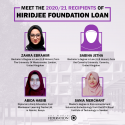
Click here to read about the four ladies who were able to use the Hiridjee loan assistance to help with their higher education.

The World Federation President, Alhajj Anwerali bhai Dharamsi alongside the Office Bearers recently traveled to Mombasa to address the seniors of the community. Among the many topics discussed, heavy emphasis was made on integration and future planned projects.

